
Pre-Pointe & Pointe
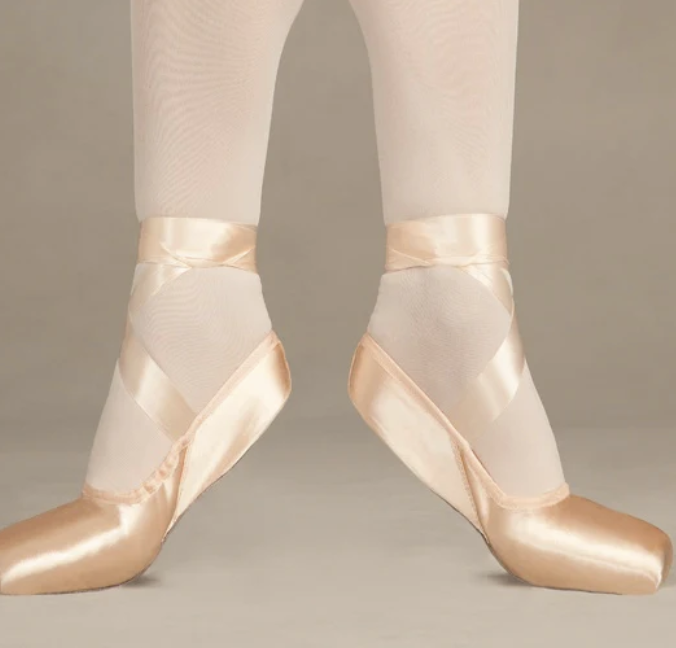
Pre Pointe
-
age 11+ w/ recommendation only-
Instructor: Zoe
These are crafted differently than flat ballet slippers and designed as an in-between training shoe to help ready the feet for pointe work.
Dancers transition into pointe shoes at different times depending upon age, the structure of their feet, posture, flexibility, precision, and strength.
It is typical to spend 1 - 3 years in pre-pointe shoes before getting pointe shoes.
Transitioning into pointe shoes involves very specific technical expectations for the dancer’s bone structure and strength.
Dancers may be recommended for pre-pointe for the purpose of building toe, foot, and ankle strength regardless of their interest in continuing forward through pointe
SEE BELOW FOR ADDITIONAL DETAILS

Beginner Pointe
-
-by recommendation only-
Instructor: Tiana
Designed for dancers who are transitioning from pre-pointe to full pointe
Dancers will not leave the barre unless it is deemed safe to do so
Includes progressions towards more advanced work (ex: may step up to sous sous or passe to prepare for pique turns)
L’Ecole de Ballet will not place a student en pointe if they are not able to execute the required criteria

Advanced Pointe
-
-by recommendation only-
Instructor: Clarissa
This class will be run as an advanced ballet class with the expectation that pointe work is executed with precision and technique, and that the dancer has the strength and experience to maintain those expectations without injury.
Pointe Information
When can I start pre-pointe? What is the difference from full pointe, and what shoes should I get?
We typically recommend pre-pointe for dancers age 11 and up who are showing signs of readiness. If you are curious about pointe readiness, we welcome you to view our requirements that are evaluated during an Initial Pointe Screening
Dancers will start out in pre-pointe shoes. These are crafted differently than flat ballet slippers and designed as an in-between training shoe to help ready the feet for pointe work. Dancers transition into pointe shoes at different times depending upon age, the structure of their feet, posture, flexibility, precision, and strength. It is typical to spend 1 - 3 years in pre-pointe shoes before getting pointe shoes. Transitioning into pointe shoes involves very specific technical expectations for the dancer’s bone structure and strength. We understand that “moving up” into pointe is something many young dancers strive for. If your dancer is struggling with this, we encourage you to reach out to any member of our staff with questions or concerns.
Pre-Pointe Shoes - This is an example of pre-pointe shoes. Purchasing online is certainly an option, but can be a bit of a gamble. Please do not purchase a generic version on Amazon. Notable brands are Bloch, Capezio, and Nikolay, among others.
Toe Pads - This is up to dancer preference. Some dancers prefer to wear toe pads to get used to the feeling they will have in pointe shoes. Other dancers prefer to just wear shoes.
For sewing, please reach out to a teacher OR find a youtube tutorial! There are some good ones out there!
What is a pointe screening?
All pre-pointe dancers are required to undergo a screening with Tiana to gauge readiness. This initial pointe screening was developed in collaboration with Amanda Donahue, our Performing Arts Athletic Trainer.
All students enrolled in Pre Pointe are automatically screened throughout the year.
Placement into full pointe is determined only by meeting specific criteria
If there appears to be a substantial lack of progress despite a dancer’s hard work and consistent effort, they will be asked to complete a full formal evaluation with Amanda if they are still hoping to get en pointe
If a dancer is feeling frustrated by a lack of progress in their strength, we encourage our dancers to meet with Amanda to develop a targeted strength-training plan. She can be reached at amanda@theintelligentbodyllc.com